28 Oct 2024
Lighting Secrets for Luxury Editorials
Luxury editorial photography is defined by one essential element — light. The way light falls on a subject can transform an ordinary photograph into an extraordinary visual statement. In high-end fashion editorials, lighting is not just a technical tool; it is an artistic language that shapes mood, texture, and emotion.
For fashion photographers, mastering light is one of the most important skills. Whether working in a professional studio or shooting on location, the right lighting technique can elevate a fashion story and give it a refined, magazine-quality look.
Understanding the Role of Light in Editorial Fashion
In luxury fashion editorials, lighting is carefully designed to highlight fabrics, enhance facial features, and create depth in the photograph. Every designer garment has textures, details, and shapes that deserve to be seen clearly.
A well-lit editorial photograph allows the viewer to appreciate the craftsmanship of the clothing while maintaining a sense of elegance and sophistication.
Photographers often treat light like a sculpting tool — shaping shadows and highlights to build a visually striking composition.
Soft Lighting for Elegant Editorial Looks
Soft lighting is one of the most widely used techniques in luxury fashion photography. It produces smooth shadows and flattering skin tones, making the model look naturally radiant.
Soft light can be created using tools such as:
- Softboxes
- Diffusers
- Large window light
- Reflectors
This type of lighting is often used in beauty editorials, luxury fashion campaigns, and magazine portraits because it enhances both the subject and the clothing without creating harsh contrasts.
Dramatic Lighting for High Fashion Impact
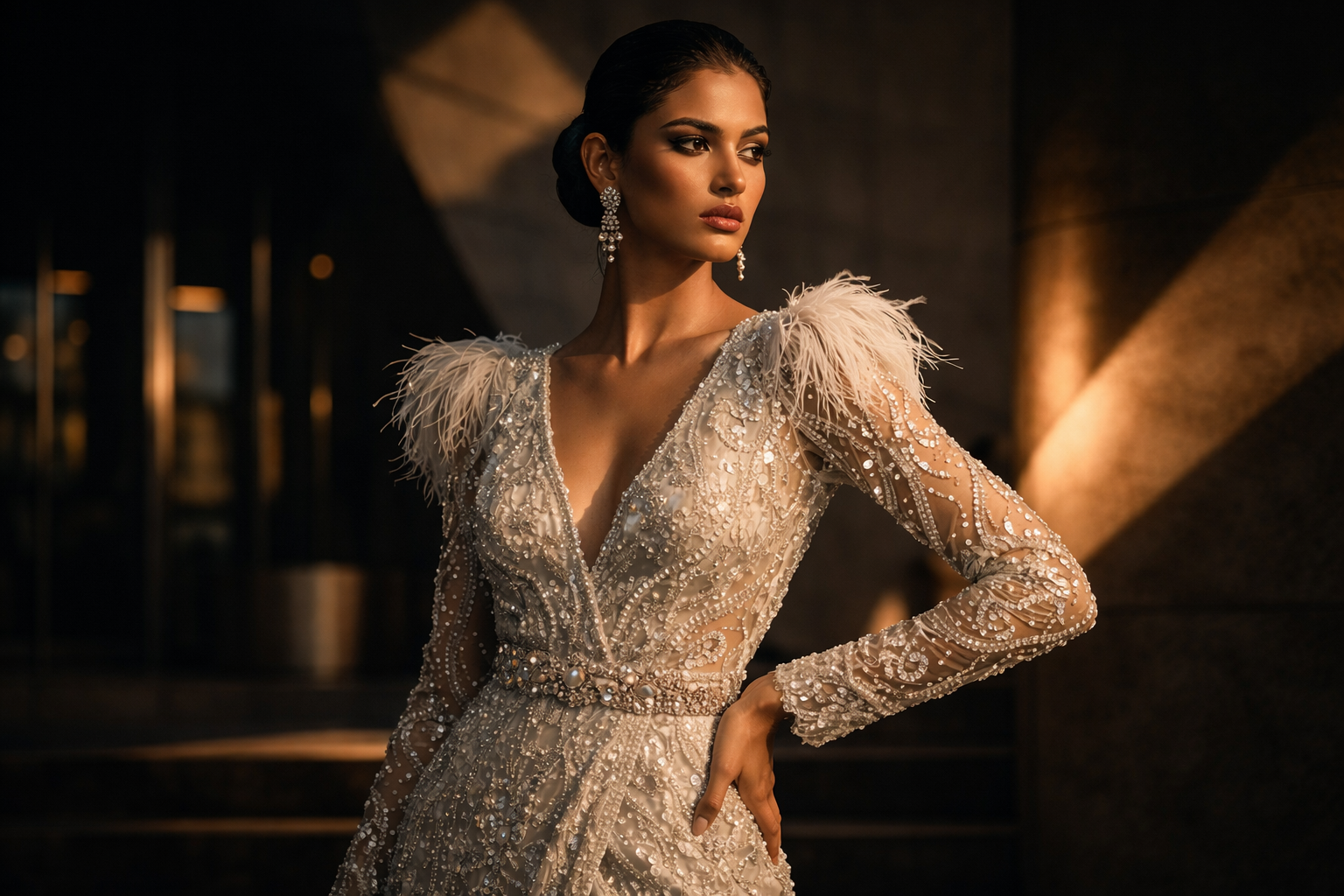
While soft lighting creates elegance, dramatic lighting brings boldness and artistic impact. Many luxury editorials use directional light to create deep shadows and strong highlights.
This style is particularly effective when photographing structured garments, metallic fabrics, or avant-garde fashion designs.
Hard light or directional studio lighting can add intensity to the photograph, making the image feel powerful and visually striking.
Using Natural Light for Editorial Storytelling
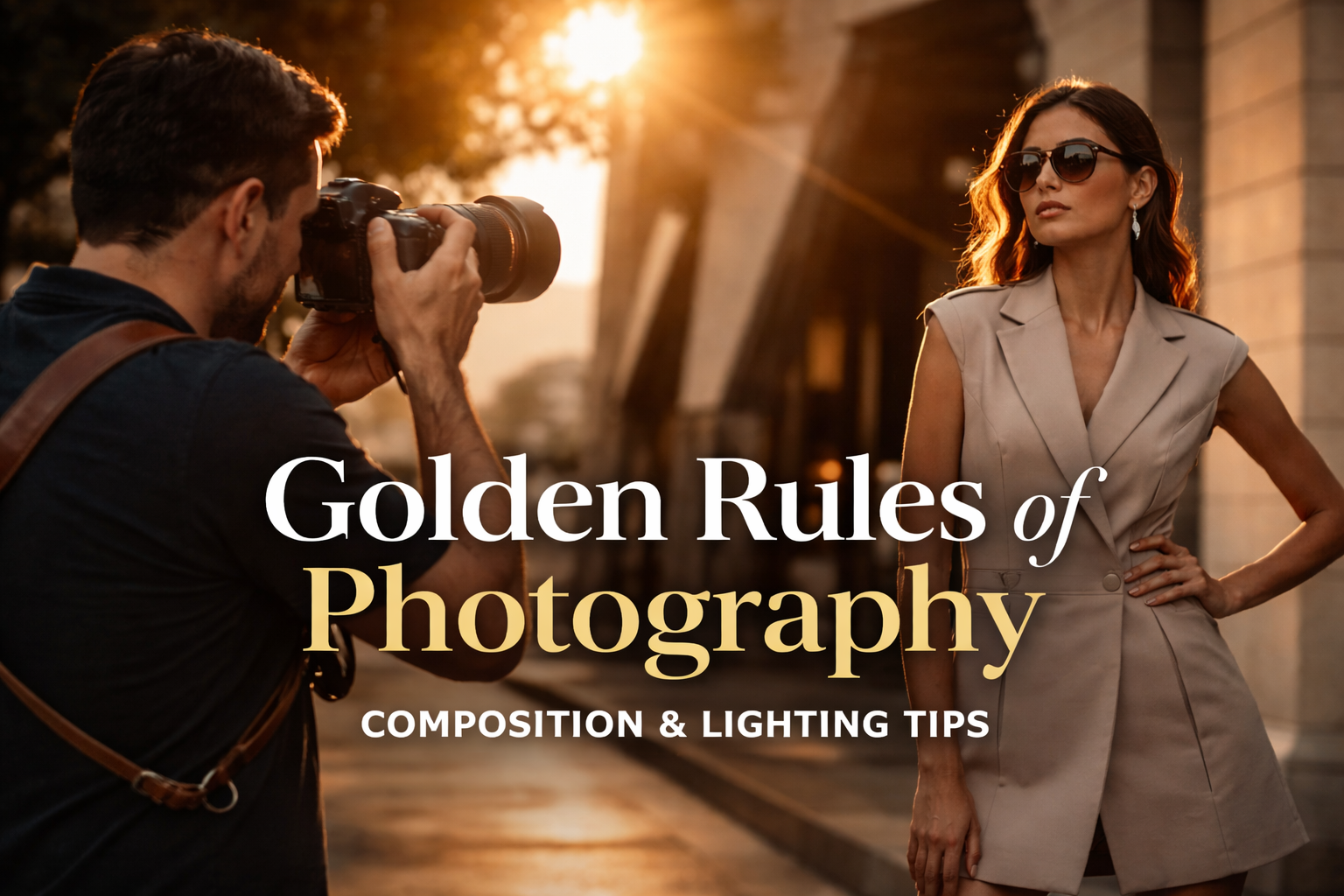
Natural light remains one of the most beautiful sources of illumination for fashion photography. Early morning light and golden hour sunlight can create warm, cinematic tones that feel organic and sophisticated.
For editorial shoots in cities like Delhi, photographers often take advantage of architectural spaces, terraces, and heritage locations to create unique lighting environments.
Natural light combined with thoughtful composition can produce timeless editorial photographs.
The Importance of Shadows and Contrast
Luxury fashion photography is not only about bright highlights. Shadows play an equally important role in shaping the visual narrative.
Controlled shadows can add mystery, drama, and dimension to the image. By adjusting the angle of light or introducing flags and reflectors, photographers can create balanced contrast that enhances the subject without overpowering the fashion itself.
Great editorial photographers understand that shadows are just as important as light.
Lighting as a Signature Style
Many renowned fashion photographers are recognized by their lighting style. Some prefer soft, romantic lighting, while others build their identity around bold contrast and dramatic highlights.
Developing a unique lighting style helps photographers stand out in the competitive world of fashion photography.
For a professional fashion photographer, light becomes a personal creative signature.
Conclusion
Luxury editorial photography is built on the foundation of thoughtful lighting. The right combination of soft light, shadows, and directional highlights can transform a fashion shoot into a powerful visual narrative.
When light is used creatively, fashion photography moves beyond documentation and becomes true visual art.